Prime Minister's Office

The Prime Minister's Office carries out official duties of the Prime Minister of the Democratic Socialist Republic of Sri Lanka and provides necessary guidance, coordination facilities and leadership to achieve economic and social development goals in accordance with the government policies.

Moreover, the Prime Minister’s Office provides necessary leadership and guidance to fulfill the aspirations of people while standing by the side of them in the hour of need with great enthusiasm and commitment. It provides regular assistance in policy making and also necessary contribution, guidance and coordination through a people centered approach to achieve Sustainable Development Goals (SDG). It plays a crucial role in maintaining diplomatic relationships and international relations, through facilitating negotiations, conducting high level diplomacy with foreign leaders, countries, states and representatives and coordinating the efforts of various government agencies and departments involved in foreign affairs.

Vision

“An independent, sovereign and prosperous Sri Lanka”

Mission

“To provide the necessary leadership for an excellent government mechanism with good governance, maintaining an effective coordination between States, Foreign missions, United Nations and Non-Governmental institutions in order to realize the aspirations of the Sri Lankans and improve their quality of life”

The Government’s objective is to create opportunities for all citizens to enjoy freedom. - Prime Minister Dr. Harini Amarasuriya

Prime Minister Dr. Harini Amarasuriya stated that the freedom had long been limited to only a privileged segment of society, and that the government’s objective is to create opportunities for all citizens to equally experience and enjoy that freedom.

The Prime Minister made these remarks on the 15th of March while opening the multi-purpose development project associated with the Angunakolapelessa Tank, developed under the “Pohosath Gamak” programme of the Ministry of Rural Development, Social Security and Community Empowerment for public.

In parallel with the multi-purpose development project carried out associating the Angunakolapelessa Leisure Island, a boating facility and the Leisure Island cafeteria were also officially opened.

Addressing the gathering further, Prime Minister Dr. Harini Amarasuriya stated:

The multi-purpose development project associated with the Angunakolapelessa Tank has received voluntary support from the community for more than 700 days. It is extremely significant in this regard. With the funding from the Ministry of Rural Development, Social Security and Community Empowerment, the Angunakolapelessa Pradeshiya Sabha, together with divisional councils, public safety committees, youth societies, trade associations, and many others in the community, was able to transform this site into a major development project within a remarkably short period of time.

This project serves as a powerful example of what can be achieved when people unite collectively for a noble purpose. Developing a country is not a task that the government alone can accomplish.

When intellectuals, religious leaders, youth, entrepreneurs, and the public come together with strong and responsible leadership, we can build a nation so resilient that no hostile force will be able to weaken it.

People in rural communities who live demanding and hardworking lives also deserve to enjoy freedom. For a long time, freedom was limited to only a privileged segment of society. As a government committed to fostering a dignified cultural life for all citizens, it is important to create more spaces like this where people can relax, walk, enjoy themselves, and spend time with peace of mind.

The occasion was graced by the presence of the members of the Maha Sangha, and attended by the Minister of Rural Development, Social Security and Community Empowerment Upali Pannilage, other ministers and parliamentarians, government officials, and local residents.

Prime Minister’s Media Division
Ensure that school events are organized without placing financial burdens on parents - Prime Minister Dr. Harini Amarasuriya

When appointments or transfers are granted, accept the appointments and assume duties at the respective stations

Utilize the funds allocated for 2026 properly for school development projects

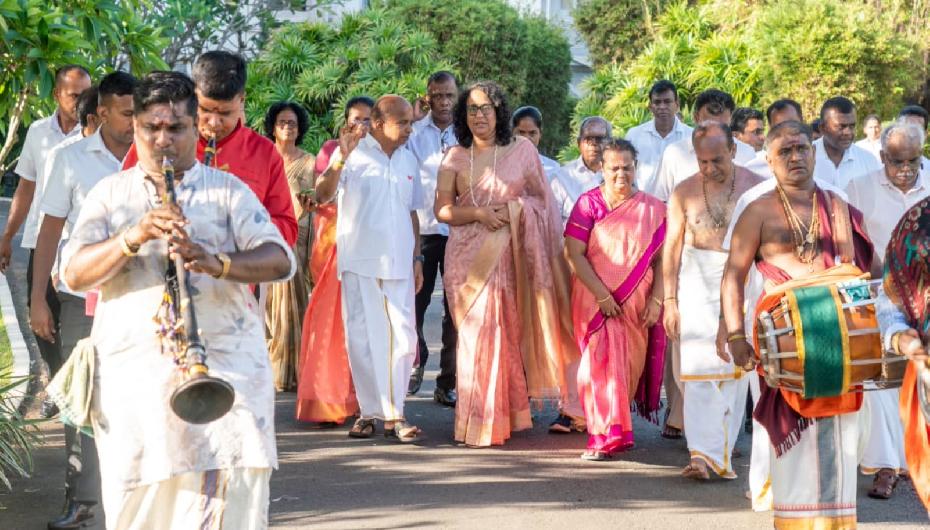
Prime Minister Dr. Harini Amarasuriya stated that school events should be organized in a manner that does not place a financial burden on parents. She also emphasized that when appointments or transfers are granted, they should be accepted and duties should be assumed at the respective stations, while further noting that the funds allocated for the year 2026 should be properly utilized for school development activities.

The Prime Minister made these remarks while addressing discussions held on 15 th of March to brief teachers and principals from the Hambantota, Tangalle, and Walasmulla education zones regarding the new education reforms.

Speaking further, the Prime Minister stated:

In 2027, new education reforms will be introduced for Grade 6 and Grade 2. A committee has already been appointed to facilitate the inclusion of students currently in Grade 6 into the new education reforms. Future actions will be taken based on the recommendations of this committee.

Measures are already underway to improve school infrastructure, classroom development, and education reforms. Plans are being implemented to maintain 25–30 students per class in the primary section and up to 35 students in secondary classes. Students should not be admitted to schools outside the provisions of the relevant circulars under any circumstances.

When developing classrooms, the Engineering Division is currently preparing plans to ensure that they are suitable for practical and activity-based learning.

Certain issues in schools can be resolved at the Provincial Council and Local Government levels. We have proposed that improvements be carried out with proper quality standards from sanitation facilities to other renovations. Funds were allocated for school development in both 2025 and 2026. Structured committees should prepare systematic plans and submit them to the District Development Committee for approval. The allocated funds must be properly used for school development activities.

By 2026, arrangements will be made to provide smart boards and internet facilities to every school. Money should not be collected from parents for this purpose. Every school has an annual plan and a budget approved for that plan. Therefore, schools should not collect additional funds from parents beyond the approved allocations. In particular, school events must be organized in a way that does not impose a burden on parents.

For many years, teacher and principal vacancies have not been properly filled, which has created numerous issues. Following the conclusion of related legal proceedings, steps are now being taken to recruit over 23,000 individuals to the teaching service in a formal manner. The relevant examinations are scheduled to be held towards the end of April or the beginning of May.

Vacancies for principal service have already been gazetted. However, the number of applications received has been very limited. We understand that there are concerns regarding salary issues in the principal service, as well as broader salary disparities. Proposals regarding these matters are being submitted to the Salary Commission. At the same time, some individuals who demand teacher appointments through protests are unwilling to accept the appointments or transfers once they are granted. While we understand that there may be personal difficulties, individuals should first accept the appointment and assume duties. There is a misconception that political intervention can help secure a preferred location, which has contributed to the crisis in the education sector.

Some individuals remain in the same school as Deputy Principals without applying for principal vacancies. This should not happen. The principal service is a dignified profession. To enhance professional recognition, a report is currently being prepared through the Parliamentary Education Council to be submitted to the Cabinet of Ministers.

Regarding infrastructure development, proposals have been made for structural committees to forecast the conditions in each division and submit development plans accordingly.

The Prime Minister further emphasized that when addressing issues related to students, authorities should not wait for national policy decisions but instead work at the divisional and provincial levels to provide prompt solutions.

The occasion was attended by the Deputy Minister of Lands and Irrigation Aravinda Senarath, Members of Parliament Nihal Galappaththi and Athula Welandagoda, along with provincial and zonal education officials, principals, teachers, and participants.

Prime Minister’s Media Division
A new curriculum will be introduced for preschools in 2027, while steps will also be taken to train teachers accordingly. – Prime Minister Dr. Harini Amarasuriya

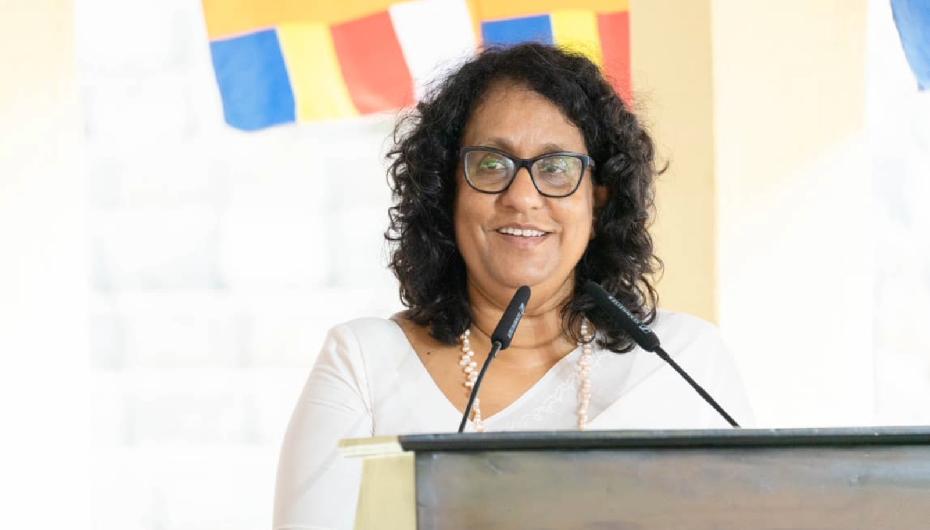
Prime Minister Dr. Harini Amarasuriya stated that a new curriculum will be introduced for preschools in 2027, while steps will also be taken to train teachers accordingly and to regulate preschools through a regulatory authority.

The Prime Minister made these remarks while addressing an awareness programme for preschool teachers in the Hambantota District on education reforms, held today (15) at the Ambalantota Pradeshiya Sabha Auditorium.

During the programme, preschool teachers briefed on the Prime Minister about the challenges they currently face. Responding to their concerns, Prime Minister Dr. Harini Amarasuriya further stated:

The issues within the preschool system cannot be discussed separately from the broader crisis in society and in the education sector. When we assumed the office in 2024, our primary challenge was to free the country from its debt burden and to establish sound economic indicators.

Although 2025 was a challenging year, we were able to bring the country’s economy to a certain level of stability and manage the national budget accordingly.

While we were working towards economic recovery, the war in the Middle East began, which has had certain impacts on our country as well. A significant amount of Sri Lanka’s foreign remittances come from our fellow citizens working in the Middle East. Today, both their livelihoods and employment are under threat. In addition, a large number of tourists travelled to Sri Lanka through Middle Eastern airspace, and the closure of those air routes and airports has reduced tourist arrivals. Another issue concerns fuel transportation. This problem has affected not only Sri Lanka but many countries around the world. If the war continues for a long period, it will have further impacts on us, and therefore we must be prepared. We also need to manage the economy carefully and reduce certain expenditures.

Although we have the ability to borrow, our intention is not to weaken the country’s economy by relying on loans.

You are aware that we have begun implementing education reforms. Within that policy framework, we are also taking steps to reform preschool education. So far, the establishment of preschools and early childhood development has not been carried out in a systematic manner. Therefore, we must regulate and standardize all preschools, which is not an easy task. First, all preschools must be formally registered. We have already prepared a curriculum for teacher training. In addition, we plan to introduce a new curriculum for preschools in 2027, provide teacher training accordingly, and regulate preschools through a regulatory authority. A recognized curriculum has also been prepared for the preschool diploma. In the future, priority for preschool teachers will be given based on these qualifications. We will also take gradual steps to enhance the professionalism of preschool teachers and establish a proper salary structure

The Prime Minister further stated that preschools fall under the authority of Provincial Councils and Pradeshiya Sabhas, while the line ministry can only provide policy recommendations. She also emphasized that issues related to preschools should be addressed in a systematic manner through structural committees and District Development Committees.

The occasion was attended by the Member of Parliament Nihal Galappaththi and other public representatives, along with preschool teachers from the Hambantota District.

Prime Minister’s Media Division
Be mindful of the accuracy of information before sharing it on social media – Prime Minister Dr. Harini Amarasuriya

Prime Minister Dr. Harini Amarasuriya stated that the weakening of public trust in information disseminated through the media is extremely dangerous for a society, and emphasized that people must be mindful of the truthfulness of information before sharing it on social media.

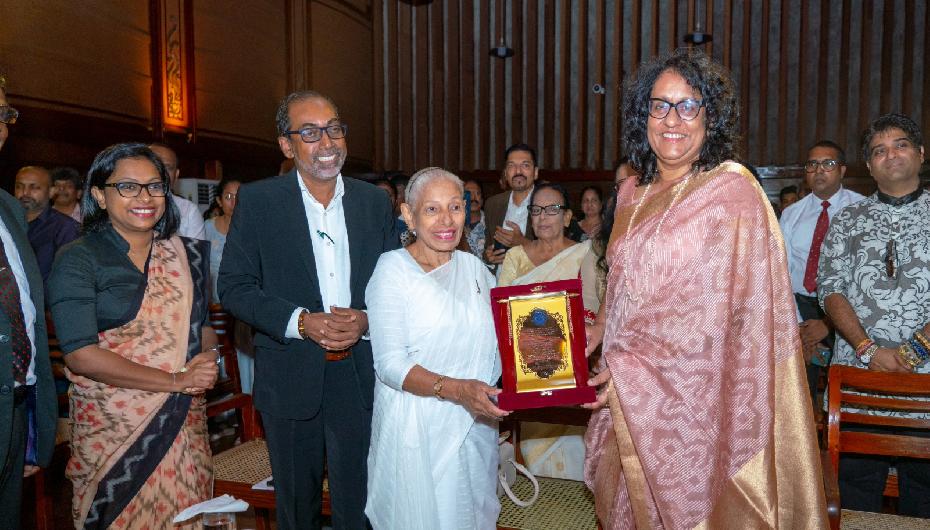
The Prime Minister made these remarks while addressing the “Sandeshaya” Media Awards Ceremony held on 14 March at the Kularathne Hall of Ananda College, Colombo. The event was organized with the aim of providing Sri Lankan school students with an opportunity to actively contribute to the national media discourse while promoting ethics, responsibility, and critical thinking.

During the “Sandeshaya” Awards Ceremony organized by the Media Unit of Ananda College, lifetime awards granted only once in a lifetime were presented to distinguished veterans in the media field, while media awards were also presented to talented students in the school category. The ceremony was held under the patronage of the Prime Minister.

Expressing her views further, the Prime Minister stated:

We live in an era where information technology and the media are changing rapidly. Along with these changes, many opportunities have emerged, but we are also confronted with numerous challenges.

We must prepare our younger generation to live in a society and a world transformed by information technology and the media.

When we observe the changes taking place in the media today, we can say that the media and information have become democratized. In the past, access to knowledge and information was largely limited to privileged or powerful groups. The authority to communicate information and decide what should be disseminated was held by a small group. However, with the advancement of technology, this has changed dramatically. As a result of this revolutionary transformation, information, data, and knowledge have now become accessible to everyone. In that sense, it is a positive development.

At the same time, we are no longer merely media viewers or consumers. As citizens, we can also become media creators. Citizens now have significant space to engage with the media and share information. While this is positive in one sense, it also carries certain dangers. There are serious questions, issues, and challenges regarding responsibility and credibility in the dissemination of information. Today, information flows so rapidly that it is sometimes difficult to determine what is true. Making decisions has become increasingly challenging. Not only in our country but globally, there have been many instances where societies have been set ablaze due to misinformation or deliberately distorted information. We have witnessed numerous occasions where people’s lives have been destroyed as a result.

Sometimes, without even realizing it, we get trapped on the internet. We share various things through our social media platforms, both necessary and unnecessary. However, what we often forget is that a large amount of personal information accumulates on the internet through these actions. Once incorrect information becomes widespread in this way, it becomes extremely difficult to erase.

The spread of false information weakens public trust in the information provided by the media, and this is extremely dangerous for a society. For the sustainability of a society, it is essential to maintain trust among citizens and trust in the institutions that influence people’s lives. Only through the trust we can safeguard the sustainability, continuity, and security of a society.

However, what has happened today due to the spread of misinformation? We no longer have confidence in our leaders. We do not even trust elders. There is doubt about whether the news we receive can be trusted. When credibility weakens within a society, it can push that society into crisis.

Therefore, it is extremely important to cultivate a culture that strengthens trust in leadership, promotes confidence in elders, and enhances awareness about reliable sources of information. In this context, those entering the field of media carry a significant responsibility.

Just like the senior professionals we honored today, you too may one day enter this field. However, there is a vast difference between the era in which they entered the profession and the era you will enter. You will carry a unique responsibility to strengthen the credibility of the media and to stand firmly behind the information you present.

You must be able to stand by the information you provide. You must reflect on whether the information you share is true and who might be affected by it. Ensuring the credibility of the information you disseminate is also your responsibility.

Similarly, as users of any form of media, we all bear a responsibility to verify the reliability of the information we receive and to be aware of how to distinguish between truth and falsehood. That is why digital literacy and media literacy are essential. It is also for this reason that we believe such subjects and concepts must be incorporated into education reforms so that our student generation can learn them.

The Prime Minister further stated that citizens have a responsibility to be mindful of the truthfulness of information before sharing content found on the internet and social media with others.

The event was attended by the Secretary to the Ministry of Health and Mass Media Anil Jasinghe, Principal of Ananda College D.M.L.P. Dissanayake, journalists, principals, teachers, and students.

Prime Minister’s Media Division
Addressing the drug menace is not merely a programme, but a national priority that must deliver results at the ground level. - Prime Minister Dr. Harini Amarasuriya

Prime Minister Dr. Harini Amarasuriya emphasized that addressing the drug issue in the country must be treated as a national priority, highlighting that it must deliver results at the ground level.

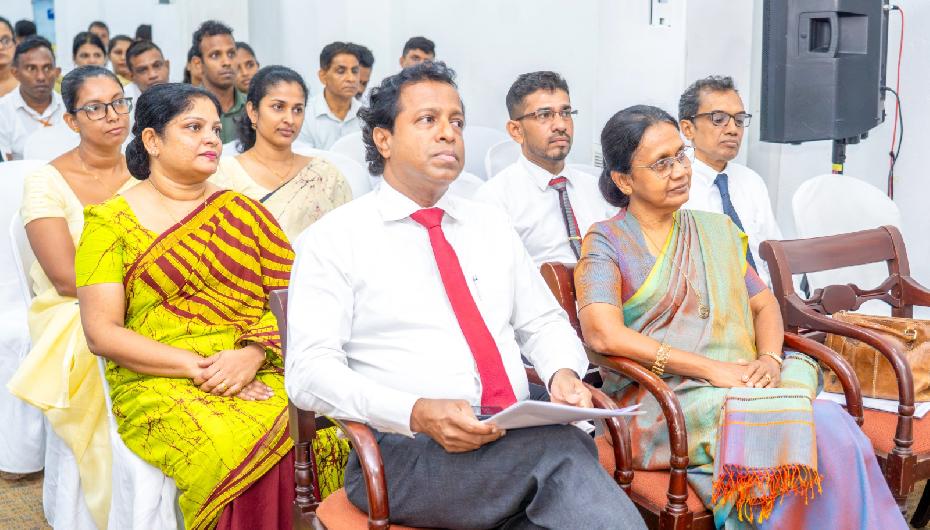
A meeting to brief the Prime Minister on the National Strategic Plan for the Management, Treatment and Rehabilitation of Persons with Substance Use Disorders (SUD) 2026–2030 was held with the participation of officials from the Ministry of Health and Mass Media and other key stakeholders on 13th of March at the Temple Trees.

The discussion focused on the proposed national strategy developed to address the growing health, social and economic challenges associated with substance use disorders in Sri Lanka. The strategic plan aims to strengthen prevention, treatment, rehabilitation and reintegration services through a coordinated and evidence-based national approach.

During the meeting, attention was drawn to existing gaps in early identification of substance use disorders, continuity of care, community-based follow-up and reintegration of recovering individuals into society. The plan proposes several key interventions, including strengthening screening and symptomatic treatment at primary healthcare and outpatient levels, improving hospital-based treatment and follow-up services, expanding residential rehabilitation facilities, and enhancing community-based rehabilitation and relapse prevention programmes.

Special emphasis has also been placed on providing targeted support for vulnerable groups, including children and adolescents, pregnant women, mothers with children and prison inmates.

Speaking on the importance of strengthening the national response to drug issues, the Prime Minister Dr. Harini Amarasuriya noted that the drug menace has evolved into a serious social crisis that threatens social stability and security of families and the nation as a whole highlighting that law enforcement and rehabilitation in this regard must be given equal priority.

The Prime Minister further underscored the importance of including public awareness initiatives and responsible media reporting as key components of the national strategy.

The meeting was attended by the Secretary to the Prime Minister Pradeep Saputhanthri, Secretary to the Ministry of Health Dr. Anil Jasinghe, officials from the Department of Prisons, Bureau of Rehabilitation, Sri Lanka Police Ministry of health, Ministry of Public Security and Parliamentary Affairs, Ministry of Justice and National Integration ,Ministry of Defense, Ministry of Education, Ministry of Women and Child Affairs and other relevant department and ministries.

Primeminister’s Media Division

Promoting Local Industries is a key priority of the Government

The Prime Minister states at the opening ceremony of INCO 2026 Exhibition.

Prime Minister Dr. Harini Amarasuriya stated that promoting the local industrial sector is one of the key priorities of the Government.

The Prime Minister made these remarks while attending the official opening ceremony of the INCO 2026 Industrial Exhibition on 13 th of March, which is being held for the 20th consecutive year at the BMICH Exhibition Center.
 
The INCO 2026 Industrial Exhibition, organized by the Institution of Incorporated Engineers, Sri Lanka (IIESL), will be held from March 13 to 15.

Addressing at the event, Prime Minister Dr. Harini Amarasuriya stated:

The engineering sector is a key driving force in addressing practical challenges faced by a country while enhancing efficiency and safety. In particular, the contribution extended by exhibitions of this nature encourages the student community to engage in innovation.

The Government has implemented several measures to accelerate the country’s industrial development. Notably, the National Industry Information System (NIIS) has established a centralized digital platform to collect data related to the country’s economic and industrial activities. The Government is also taking steps to provide necessary financial support to industrialists through Revolving Funds.

It is also noteworthy that this year’s exhibition has attracted international participation, creating opportunities for local entrepreneurs to explore new markets and gain exposure to international technologies. With the participation of engineers, students, and entrepreneurs, this exhibition marks an important step toward the country’s industrial future.

The event was attended by the Chairman of the Export Development Board Mangala Wijesinghe, Chairman of the National Paper Company Limited Mr. Upali Rathnayake, President of the Institution of Incorporated Engineers, Sri Lanka Engineer Ananda Gunawardena, along with local and foreign investors, entrepreneurs, and industrialists.

Prime Minister’s Media Division